How to Use Calming Signals in Your Own Body Language to Communicate Better With Your Dog

How to Use Calming Signals in Your Own Body Language to Communicate Better With Your Dog

  • Calming signals are a two-way language — your dog reads your body just as much as you read theirs.
  • Simple posture shifts like turning sideways or crouching down can immediately reduce your dog's anxiety.
  • Most owners accidentally use threatening body language without realising it — and this guide shows you how to stop.
  • Practising calming signals consistently builds trust and speeds up every other area of your dog's training.
  • These techniques work especially well for nervous, reactive, or rescue dogs who are easily overwhelmed.

If your dog shuts down, bolts away, or goes stiff when you approach, the problem might not be your dog at all — it might be your body language. Most owners focus on reading their dog’s signals without ever stopping to ask what signals they’re sending back. Once you understand how to use calming signals deliberately, the whole relationship shifts.

What Are Calming Signals and Why Do They Work Both Ways?

The body language conversation your dog has been waiting for you to join.

Calming signals are the subtle gestures dogs use to de-escalate tension — yawning, looking away, turning the body sideways, sniffing the ground. Turid Rugaas, the Norwegian trainer who first documented them, observed around 30 distinct signals in domestic dogs. What most people miss is that dogs expect these signals back from the beings they live with.

When you loom over your dog, make direct eye contact, or rush straight toward them, you’re speaking in a language that reads as threatening — even if your intentions are loving. Your dog isn’t being stubborn or dramatic. They’re responding logically to what your body is saying. Our hub article, How to Read Your Dog’s Body Language and Calming Signals: The Complete Guide for Perth Dog Owners, covers how dogs use these signals among themselves — this post is about flipping the script and using them yourself.

The good news is that these signals are easy to learn and immediately effective. You don’t need equipment, treats, or a training session. You need to change how you hold your body — and your dog will notice within seconds.

Step 1: How Do You Use Sideways Body Orientation to Approach a Nervous Dog?

One small turn of your shoulders can be the difference between connection and shutdown.

Walking directly toward a dog — face-on, upright, making eye contact — is one of the most socially aggressive postures in canine language. Even with a confident dog, it’s a lot. With a nervous or reactive dog, it can trigger immediate avoidance or defensiveness.

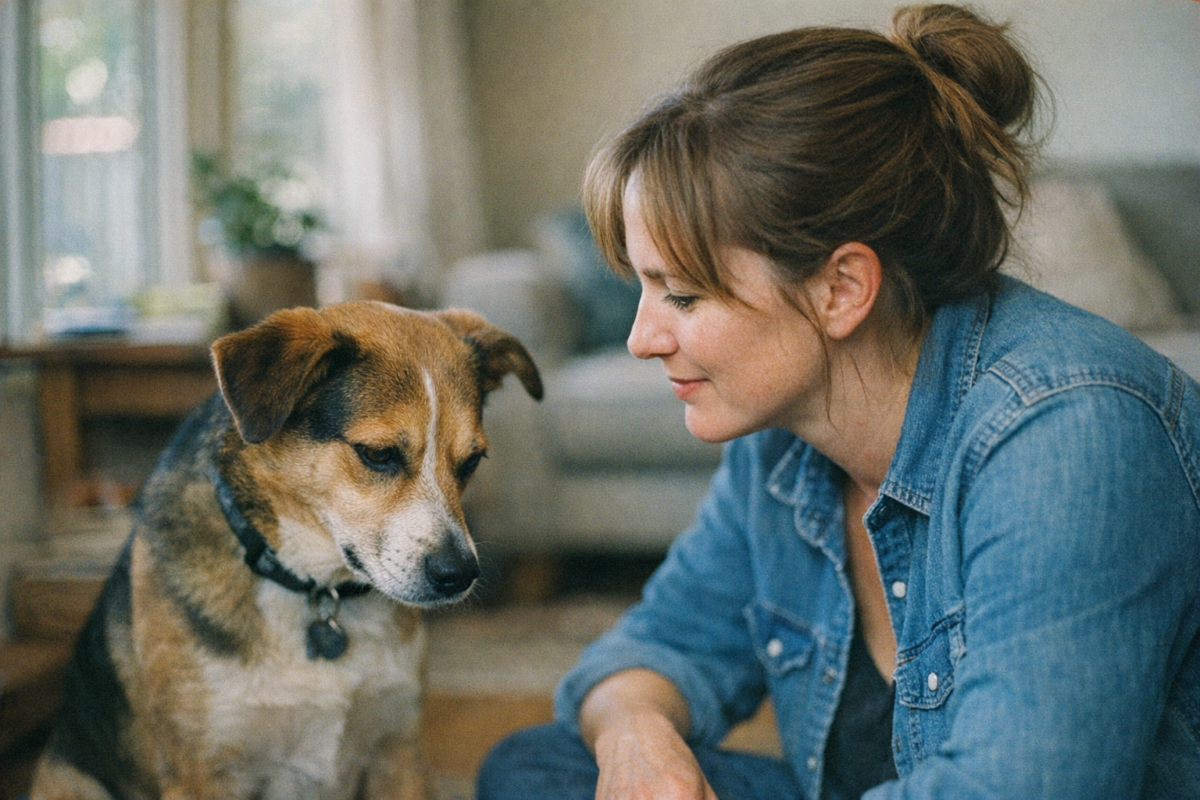
Instead, turn your body 45 degrees sideways as you approach. Present your side, not your chest. This single adjustment signals that you’re not a threat and that you’re not demanding anything. Try it the next time your dog seems reluctant to come to you — approach at an angle, pause, and let them close the gap themselves.

If your dog tends to back away when you walk toward them, stop walking altogether and simply crouch sideways. In most cases, a curious or anxious dog will approach you within 20–30 seconds once the pressure is off.

Step 2: Why Should You Avoid Direct Eye Contact With a Stressed Dog?

Eye contact is powerful — but only when your dog has chosen to offer it first.

In canine social behaviour, sustained direct eye contact is a challenge or a threat. When you stare at your dog to get their attention, you may actually be making them more anxious, not less. This is especially relevant if your dog shows lip licks, whale eye, or yawning in your presence — signals covered in detail in our related article, Whale Eye, Lip Licks and Yawns: What Your Dog’s Subtle Stress Signals Really Mean.

To mirror a calming signal, soften your gaze and look slightly to the side rather than straight into your dog’s eyes. Blink slowly, or glance away entirely for a few seconds. You’ll often see your dog visibly relax — they may shake off, yawn, or approach you more willingly. Let eye contact be something they offer, not something you demand.

Step 3: How Does Crouching Down Change How Your Dog Perceives You?

Height reads as dominance — reducing it reads as safety.

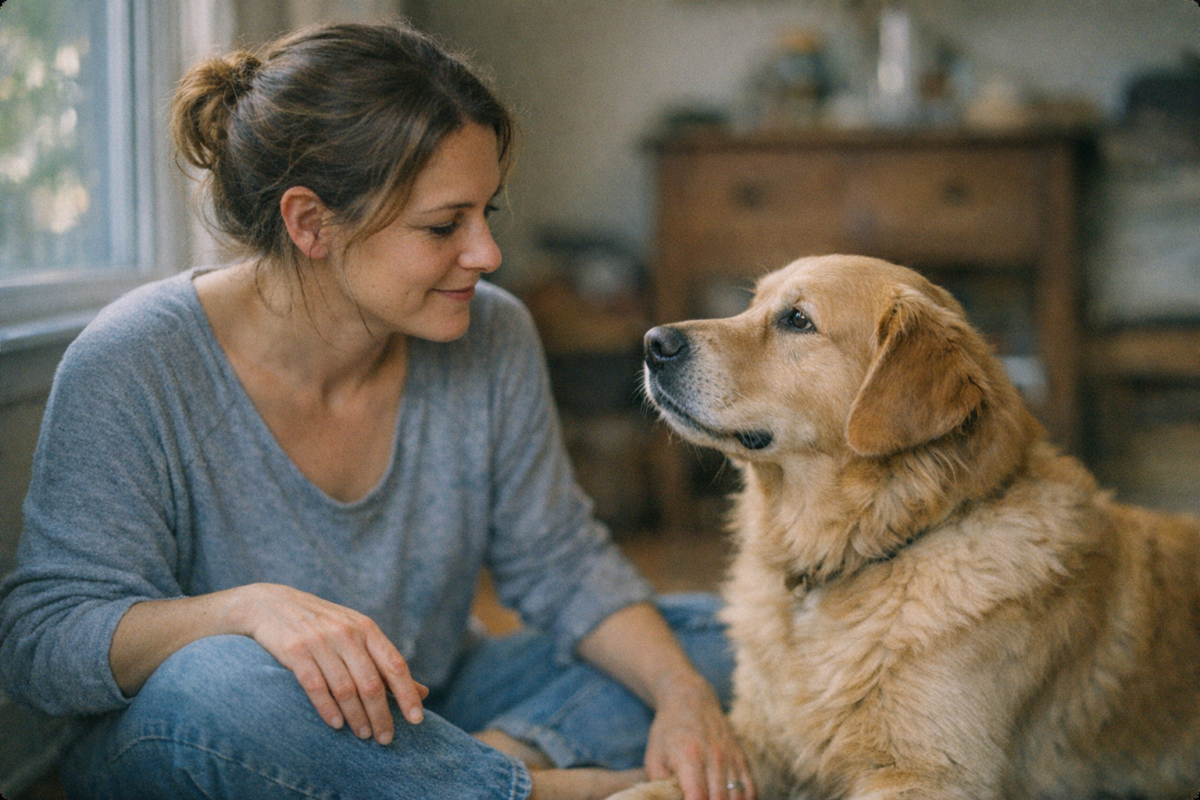
Your full standing height is genuinely imposing to a dog. When you crouch down — especially by turning to the side and lowering yourself rather than bending directly over them — you reduce the physical and emotional pressure dramatically. This is one of the fastest calming signals you can use with a dog who’s overwhelmed or unsure.

Avoid bending over a dog from above, which still feels looming. Instead, get low by crouching or sitting on the ground beside them. Let them sniff you at their own pace. This posture works especially well during greetings, after scolding (which you’ve since stopped using — right?), or when introducing your dog to a new environment.

If you work with a reactive dog, pairing this with slow movement and no eye contact is a powerful combination. You can read more about what’s happening in a reactive dog’s body before behaviour escalates in Understanding Reactive Dog Body Language: Early Warning Signs Every Owner Should Know.

Step 4: How Can Slowing Your Movements Send a Clearer Calming Message?

Fast movements signal urgency or threat — slow movements signal calm and safety.

Speed is a signal. Quick, jerky, or unpredictable movement raises arousal in dogs — it can read as either exciting or threatening depending on context. When you deliberately slow every movement down, you’re telling your dog there’s nothing to react to. This is particularly useful during leashing up, nail trims, vet visits, or any handling your dog finds uncomfortable.

Practise reaching toward your dog at half your normal speed, pausing mid-reach to let them process. No grabbing, no sudden lunges for the collar. You’ll find many dogs who are normally twitchy about handling start to tolerate — and eventually welcome — contact when the approach feels predictable and unhurried.

Slow movement is also one of the best tools for preventing conflict at the dog park. If you see tension building between dogs and need to step in, moving slowly and calmly — rather than rushing over — dramatically reduces the chance of escalating the situation. See Dog Body Language in the Park: How to Spot Trouble Before It Starts for the full picture on intervening safely.

Step 5: How Do You Use Yawning and Lip Licking as Intentional Calming Signals?

Yes — you can actually yawn at your dog and have it mean something.

This one surprises people, but it works. A slow, deliberate yawn directed at your dog during a tense moment — when they’re stressed at the vet, when training has hit a wall, or when they’re locked onto something that’s winding them up — can genuinely interrupt the stress cycle. Many dogs will yawn back within seconds.

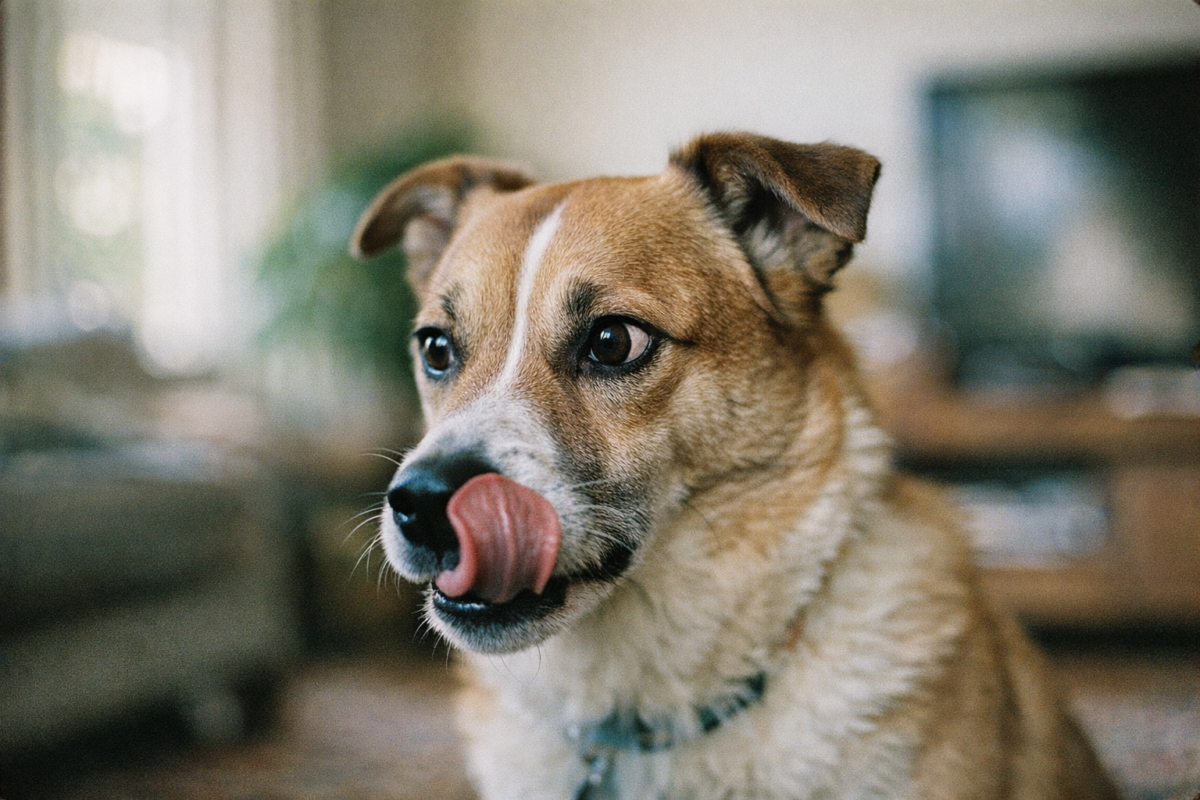
Slow lip licks have a similar effect. These aren’t tricks — they’re signals your dog already understands because other dogs use them constantly. You’re simply speaking the language back. Keep the yawn slow and obvious, and pair it with a sideways glance rather than staring at your dog while you do it.

How Do You Build This Into Your Daily Routine Without Overthinking It?

Small, consistent changes in how you carry yourself make the biggest long-term difference.

You don’t need to run a dedicated training session to practise calming signals. Build them into the moments that already happen every day: coming home to greet your dog, calling them in from the yard, approaching them during rest, putting on their lead before a walk. These are the high-frequency interactions where your body language shapes your dog’s sense of safety over time.

Start with just one signal — the sideways approach is the easiest entry point. Do it for a week every time you walk toward your dog. Notice whether they seem more relaxed, whether recalls improve, whether they seek you out more. The feedback loop is fast when you’re consistent.

Over time, these adjustments stop being deliberate choices and become your natural way of moving around your dog. That’s when the real shift in the relationship happens — your dog learns that you’re someone who speaks their language, and trust becomes the foundation for everything else you work on together.

  • Approach at a 45-degree angle, never face-on
  • Soften your gaze — avoid prolonged direct eye contact
  • Crouch sideways rather than bending over your dog
  • Slow every movement down, especially during handling
  • Use deliberate yawns and slow lip licks to interrupt tension
  • Let your dog close the gap — don't force contact

Frequently Asked Questions About Using Calming Signals With Your Dog

Quick, honest answers to the questions Perth dog owners ask most.

Will Using Calming Signals Make My Dog Think I'm Weak or Less of a Leader?

Not at all — this is a really common concern, but it’s based on an outdated view of dog training. Calming signals are what confident, socially competent dogs use to communicate. Using them makes you more readable and trustworthy to your dog, which actually strengthens your relationship rather than undermining it.

How Quickly Will I See Results When I Start Using These Signals?

Most owners notice a difference within the first few days of consistently using even one signal — typically the sideways approach or crouching. Dogs are highly attuned to body language, so they pick up on changes in your movement and posture very quickly. Nervous or reactive dogs often show the most dramatic early response.

Do Calming Signals Work on All Dogs, Including Reactive or Fearful Ones?

Yes — in fact, reactive and fearful dogs benefit the most because they’re typically operating with an already elevated stress level. Calming signals reduce the pressure in your interactions and help them feel safer around you. That said, reactive dogs also need structured support — if you’re dealing with significant reactivity, professional guidance alongside these techniques will get you further, faster.

Can I Use Calming Signals to Help My Dog Around Strangers or Other Dogs?

Absolutely — and this is one of the most practical applications. Coaching visitors to approach your dog sideways and avoid eye contact can transform a greeting from stressful to smooth. At the dog park, using slow movement and indirect body orientation when approaching a tense situation gives other dogs a clear signal that you’re not a threat, which helps de-escalate before things get out of hand.

Ready to Build a Calmer, More Connected Relationship With Your Dog?

At Agile Dogs in Perth, we help you and your dog understand each other better — through practical, evidence-based training that starts with communication. Call us on 0448 153 316 or send an enquiry and let’s talk about where to start.

Understanding Reactive Dog Body Language: Early Warning Signs Every Owner Should Know

Understanding Reactive Dog Body Language: Early Warning Signs Every Owner Should Know

  • Reactivity almost always starts with subtle body language signals — not the lunge or the bark.
  • Learning to read your dog's early warning signs gives you a window to intervene before things escalate.
  • The stress ladder is real: every missed signal moves your dog one step closer to a full reaction.
  • Your own body language plays a direct role in how quickly your dog escalates — or settles.
  • Catching signals early makes training faster, walks more peaceful, and your bond significantly stronger.

If your dog has ever exploded into barking, lunging, or snapping and left you completely blindsided, you’re not alone — and you’re not failing as an owner. The truth is, your dog almost certainly did warn you. You just didn’t know what to look for yet. This post will change that.

What Does 'Reactive' Actually Mean in Dog Behaviour?

Reactivity isn't bad behaviour — it's a communication problem waiting to be solved.

A reactive dog is one that responds to certain triggers — other dogs, strangers, traffic, bikes — with behaviour that looks dramatically out of proportion. Barking, lunging, spinning, or freezing are all common. But here’s the key thing: reactivity is a symptom, not a personality trait.

Most reactive dogs are either fearful, frustrated, or overstimulated — sometimes all three at once. A dog who lunges at other dogs on leash might actually be desperate to greet them, not fight them. Understanding why your dog reacts changes everything about how you respond.

For a broader foundation on how dogs communicate through their whole body, the complete guide to reading your dog’s body language and calming signals for Perth dog owners is a brilliant starting point before diving deeper here.

What Does the Stress Ladder Look Like in a Reactive Dog?

Every reaction has a build-up — and every rung of the ladder is a chance to step in.

Think of your dog’s arousal like a ladder. At the bottom: calm and relaxed. At the top: full-blown reactive outburst. Most owners only notice their dog when they’re near the top — but the climb starts much, much earlier. Your job is to spot the lower rungs.

The lower rungs typically look like soft, easy-to-miss signals: a slight stiffening of the body, a lip lick, ears rotating forward, or a weight shift onto the front legs. These aren’t dramatic — that’s exactly why they get missed. If you’d like to go deeper on these, the article on whale eye, lip licks, and yawns breaks down each subtle stress signal in detail.

Once a dog reaches the upper rungs of the stress ladder — hackles fully raised, hard stare locked on trigger — rational learning stops. You can’t train a dog who is over threshold. Your priority at that point is distance and de-escalation, not commands.

What Are the Earliest Physical Signs That a Dog Is About to React?

These signals appear seconds before a reaction — and most owners miss every single one.

The first physical warning signs are almost always in the eyes, ears, and posture. Look for a sudden stillness — your dog stops sniffing, stops moving, and locks their gaze. This hard stare with a freeze is one of the clearest early indicators that your dog has clocked something and is deciding what to do about it.

Ears shifting forward or erecting (depending on breed), tail going stiff and high, and weight transferring onto the front legs are all happening in the same two-to-three-second window. If you spot even one of these, that’s your cue to act — increase distance, change direction, or use a calm interrupter.

  • Hard stare: eyes lock onto the trigger, blinking stops, expression goes flat
  • Body freeze: mid-step stillness, like someone pressed pause on your dog
  • Forward weight shift: front legs take more weight, chest lowers slightly
  • Tail stiffening: tail goes rigid — high and stiff in arousal, tucked in fear
  • Ears forward or pinned: depending on breed and emotional state
  • Closed mouth: if your dog was panting and suddenly closes their mouth, pay attention
  • Hackles raising: can appear just at the shoulders or run the full length of the back

How Do You Tell the Difference Between Fear-Based and Frustration-Based Reactivity?

The outburst can look identical — but the emotional driver determines your entire training approach.

Fear-based reactivity typically involves a dog who wants distance. Look for a low, tucked body posture, ears pinned back, a tail low or tucked, and a dog who tries to move away before the reaction kicks in. The bark is often high-pitched and frantic, and the dog may take any out you offer — turning away, going behind you, or retreating.

Frustration-based reactivity looks completely different at the lower rungs. This dog is usually forward-focused — straining at the leash, whining, spinning, making high-pitched sounds before the trigger even arrives. The body is forward and tense, tail is often high and fast-wagging. This dog wants to get to the trigger, not away from it.

Why does this matter? Because the training solution is different for each. Flooding a fear-reactive dog by moving closer will make things dramatically worse. And simply redirecting a frustrated dog without addressing their leash manners and impulse control won’t stick long-term.

Film your dog on walks using your phone in your pocket or a chest mount. Watching footage back at normal speed — and especially in slow motion — will reveal early signals you’re completely missing in real time. Most owners are genuinely shocked by what they see.

What Does the 'Trigger Stacking' Effect Look Like on a Walk?

One trigger your dog handles fine. Three in a row? That's a very different story.

Trigger stacking is what happens when your dog encounters multiple stressors in a short window before their stress hormones have had time to drop back to baseline. A bin truck passes — manageable. Then a dog barks from behind a fence — still okay. Then a jogger comes around the corner — and suddenly your dog absolutely loses it at what seems like nothing.

The jogger wasn’t the problem. The stack was the problem. Each trigger added to a rising baseline that never got a chance to settle. This is why a dog who was fine at the start of the walk completely falls apart twenty minutes in — especially on high-stimulation routes like dog parks, busy streets, or school zones.

Recognising trigger stacking means you can actively manage your walk route and pacing to keep your dog under threshold. Shorter loops, quieter times of day, and sniff breaks that let your dog’s nervous system reset are all practical tools — not workarounds.

How Does Your Own Body Language Affect Your Dog's Reactivity?

Your tension travels straight down the lead — and your dog reads every bit of it.

The moment you spot a trigger ahead, your body changes: grip tightens, breathing shortens, posture stiffens. Your dog feels all of that before they’ve even registered what you’ve seen. You’ve just told them — non-verbally — that something worth worrying about is coming. And they’ll respond accordingly.

Learning to consciously soften your body when a trigger appears is one of the most powerful and underrated skills in reactive dog handling. Exhale slowly, loosen your grip, keep your shoulders down, and change direction with a relaxed, casual energy rather than a tense yank. Your dog is watching you for information.

If you want to go further with this, the article on how to use calming signals in your own body language to communicate better with your dog explores exactly how to do this step by step — it’s genuinely one of the most practical reads for reactive dog owners.

What Should You Actually Do When You Spot an Early Warning Sign?

Spotting the signal is half the work — here's what to do in the three seconds that follow.

The golden rule: increase distance before your dog escalates, not after. The moment you see a freeze, a hard stare, or a mouth snap shut — move. Turn, curve away, step behind a parked car, or duck into a side street. You’re not retreating. You’re buying your dog space to think.

  • Step 1: Spot the early signal — freeze, stare, mouth closing, weight shift forward
  • Step 2: Increase distance immediately — turn, curve away, or step behind cover
  • Step 3: Soften your own body — breathe out, loosen your grip, drop your shoulders
  • Step 4: Use a calm, upbeat interrupter to redirect attention back to you (not a tense command)
  • Step 5: Reward any offered eye contact or disengagement from the trigger generously
  • Step 6: Note what happened — trigger type, distance, time of day — to spot patterns

If you’re regularly in environments where these situations are unavoidable — dog parks, off-leash areas, busy Perth suburbs — the article on dog body language in the park is essential reading for spotting trouble from a distance before it ever reaches your dog.

Your Questions About Reactive Dog Body Language, Answered

Straight answers to the questions Perth dog owners ask most about reactivity.

Is My Dog Being Aggressive or Just Reactive — and Does the Difference Matter?

Reactivity and aggression can look similar but have very different emotional roots and risk profiles. Most reactive dogs are over-threshold due to fear or frustration — not intent to cause harm. That said, reactivity that involves repeated escalation, contact, or bites does need professional assessment. If you’re unsure, a behaviour consultation is always worth doing early rather than late.

At What Age Do Dogs Typically Start Showing Reactive Behaviour?

Reactivity often surfaces between 6 and 18 months — as adolescence hits and early socialisation windows close. However, it can develop at any age following a traumatic experience, illness, or significant change in environment. Dogs adopted as adults sometimes show reactivity that emerges weeks or months after settling in, as they become more confident expressing themselves.

Can a Reactive Dog Ever Become Fully Comfortable Around Their Triggers?

Many reactive dogs make remarkable, life-changing progress with the right approach — and some reach a point where their triggers genuinely don’t phase them. Others manage beautifully with consistent handling strategies and a realistic understanding of their limits. The goal isn’t a perfect dog — it’s a dog who can navigate their world without distress, and an owner who knows how to support them.

Should I Be Correcting My Dog When They React, or Ignoring the Outburst?

Correcting a dog who is already over threshold adds stress on top of stress and almost always makes reactivity worse over time — especially in fear-based cases. Ignoring the outburst entirely isn’t the answer either. The most effective approach is to prevent the outburst by reading early signals and managing distance, then building new emotional associations with triggers through structured training.

Ready to Finally Get Ahead of Your Dog's Reactions?

Agile Dogs runs specialist reactive dog classes in Perth designed to give you the exact skills to read your dog earlier, respond smarter, and make every walk less stressful. Call 0448 153 316 or hit the button below to enquire today.

Dog Body Language in the Park: How to Spot Trouble Before It Starts

Dog Body Language in the Park: How to Spot Trouble Before It Starts

  • A stiff body and a hard stare are early warning signs that most owners miss — until it's too late.
  • The park is a high-stimulation environment where stress signals escalate faster than anywhere else.
  • You can prevent most confrontations by reading the situation 10–15 seconds before your dog reacts.
  • Knowing which signals to watch in other dogs is just as important as knowing your own dog's triggers.
  • Simple positioning habits — where you stand, how you move — can de-escalate tension before it builds.

The dog park should be fun. But if you’ve ever watched a relaxed afternoon turn into a snarling standoff in under five seconds, you know how fast things can go wrong. Most incidents don’t come out of nowhere — they follow a clear sequence of body language signals that the dogs were broadcasting the whole time. The problem is, most of us aren’t trained to see them yet.

Why Is the Park So Much Harder to Read Than Your Backyard?

High arousal and unfamiliar dogs make every signal harder to interpret accurately.

At home, your dog is relaxed, you know their baseline, and there are no surprises. At the park, arousal levels spike quickly — new smells, strange dogs, excited kids, and squeaky toys all compete for attention at once. A dog who gives clear, easy-to-read signals in the backyard may compress or skip signals entirely when they’re over-threshold.

This compression is exactly why parks catch owners off-guard. Your dog might go from slightly tense to reactive in two seconds instead of ten, because the environment has already pushed them close to their limit before the interaction even begins. Understanding this helps you start watching earlier — before your dog is even near another dog.

If you want to build a solid foundation before diving into park-specific scenarios, the How to Read Your Dog’s Body Language and Calming Signals: The Complete Guide for Perth Dog Owners covers every core signal in detail and is the best place to start.
What Does a Relaxed Dog Actually Look Like at the Park?

You need a clear baseline before you can spot when something shifts.

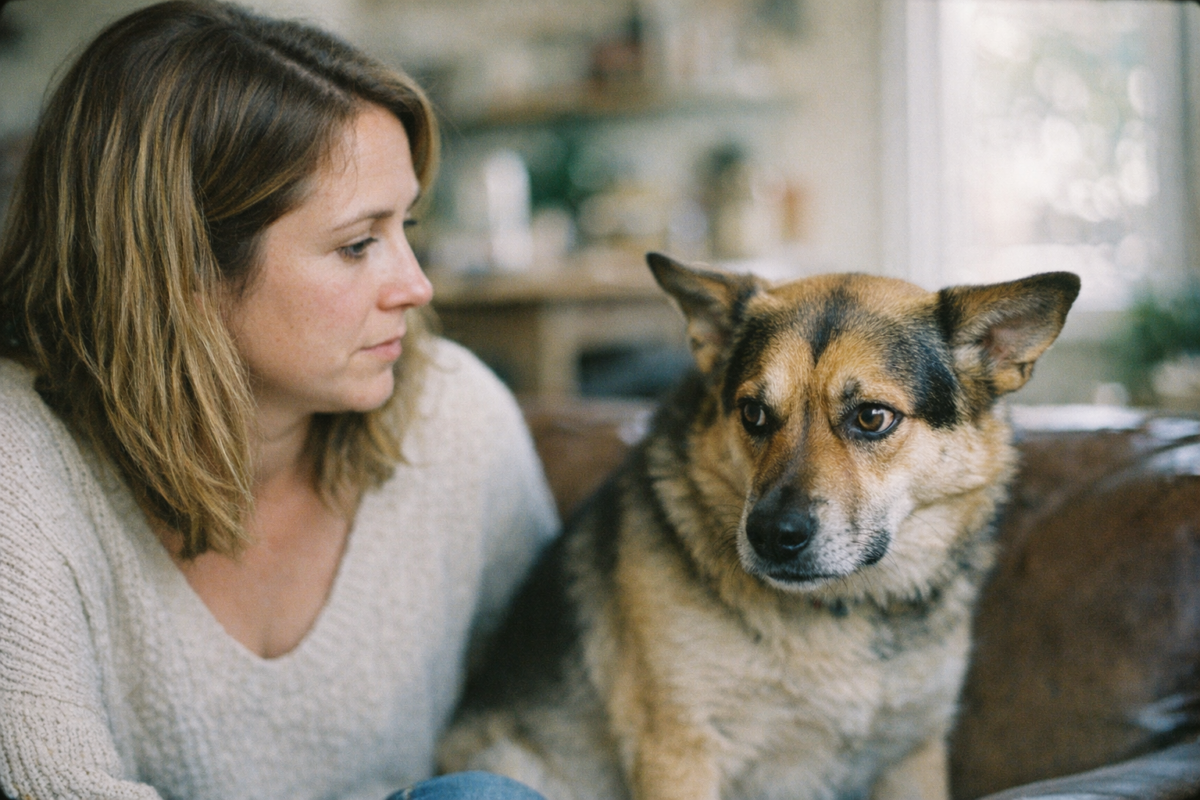
A genuinely relaxed dog moves with a loose, wiggly body. Their mouth is soft and slightly open, their tail swings in a low, easy arc, and their weight is balanced evenly over all four paws. They check in with you occasionally, sniff the ground freely, and break off interactions without stiffening.

This is your reference point. The moment you notice your dog’s body shift from fluid to tight and deliberate — weight pushed forward, tail raised and stiff, mouth closed — something has changed in how they’re processing the environment. That shift is your cue to act, not wait.

A tail held high and wagging stiffly is not a happy signal — it’s a high-arousal signal. Fast, loose wagging from a low tail position is relaxed. Slow, rigid wagging from a high tail position means your dog is tense and assessing. These look similar from a distance, so get close enough to read the whole body, not just the tail.

Which Early Warning Signs Should You Watch for in Other Dogs?

The dog approaching your dog is telling you exactly what's coming — if you know how to look.

When another dog approaches yours, scan their whole body in one quick sweep. A direct, stiff-legged approach with a high tail, closed mouth, and hard, unblinking eye contact is a high-risk greeting posture. Compare that to a dog who curves their body slightly, sniffs the ground on the way in, and approaches from the side — that’s confident and polite.

Whale eye — where you can see the whites of a dog’s eyes — is one of the clearest signs that a dog is uncomfortable and about to react. Combined with a lip lick or a yawn in a high-energy context, it tells you the dog is trying to de-escalate but is close to their limit. Our article on Whale Eye, Lip Licks and Yawns: What Your Dog’s Subtle Stress Signals Really Mean breaks these micro-signals down in much more detail.

Also watch for piloerection — the fur standing up along the spine. It can appear just between the shoulders, just above the tail, or along the full back. Any raised hackles mean the dog’s nervous system is firing. It’s not always aggression, but it always means heightened arousal, and that’s enough reason to create distance immediately.

How Do You Read the Interaction Once the Dogs Are Together?

Healthy play and mounting tension look totally different — once you know what to watch.

Healthy play involves role reversal and pauses. One dog chases, then the other chases back. One dog pins, then they swap. There are natural breaks where both dogs shake off, sniff the ground, or trot away briefly before re-engaging. This back-and-forth is the hallmark of balanced play.

Tension looks different. One dog is always on top, always chasing, always pinning — and the other dog isn’t getting a turn. Watch the dog on the receiving end: are they showing whale eye, tucking their tail, trying to move away, or freezing? If they are, the interaction has stopped being play and started being pressure. That’s your moment to step in calmly and interrupt.

  • Play bow (elbows down, bottom up) = genuine invitation to play
  • Bouncy, exaggerated movements = playful arousal, not threat
  • One dog consistently fleeing without re-engaging = not play, it's stress
  • Freezing mid-interaction = a very serious warning sign, act immediately
  • Repeated mounting despite the other dog moving away = the interaction needs to end

Call your dog away for a 30-second break every few minutes during play, even when things look fine. This keeps arousal levels from creeping up gradually, which is how many park incidents actually start — not with an obvious trigger, but with two dogs who’ve both been getting slowly more wound up for ten minutes.

What Should You Do With Your Own Body When Tension Is Building?

Your posture and movement send signals to every dog in that park — use them deliberately.

The instinct when you see trouble brewing is to rush in, call loudly, and pull your dog away. That instinct will almost always make things worse. Fast movement and a tense posture increase arousal in both dogs and can tip a tense moment into an actual incident. Instead, move slowly and smoothly, keep your body side-on rather than squared up, and use a calm, low voice.

Use your body as a calm physical barrier by walking slowly between the two dogs without rushing or leaning forward. Don’t grab collars from above — that’s a high-pressure action that can trigger a bite reflex in a stressed dog. Walk through, break the eye contact between them, and call your dog to follow you as you move away.

There’s a whole article dedicated to this — How to Use Calming Signals in Your Own Body Language to Communicate Better With Your Dog — and the techniques there translate directly to park situations. Your body is a tool; learning to use it well changes everything about how your dog responds to you under pressure.

How Do You Handle a Dog You Don't Know Approaching on Leash?

On-leash greetings carry far more risk than most owners realise — here's how to manage them safely.

On-leash greetings are genuinely risky, and it’s fine — actually smart — to opt out entirely. A leash restricts your dog’s ability to use their normal communication and escape options. Many dogs who are fine off-leash become reactive on-leash purely because they feel trapped. If another dog is approaching on-leash and you’re unsure, step off the path, put your dog in a sit beside you, and let them pass.

If a greeting does happen, keep the lead loose rather than tight. A tight lead communicates tension directly down the line to your dog. Give enough slack that both dogs can make small movements and sniff naturally, but stay alert and keep it brief — five seconds is plenty. If either dog stiffens, redirect and move on without making a drama of it.

For dogs who already show tension around other dogs on-leash, the article Understanding Reactive Dog Body Language: Early Warning Signs Every Owner Should Know will give you a much more detailed picture of the escalation sequence — and how to interrupt it early.

Questions Perth Dog Owners Ask About Park Body Language

Real answers to the questions that come up most on the training field.

My dog's tail is always wagging at the park — does that mean they're always happy?

Not necessarily. Tail position matters as much as movement. A low, loose wag signals relaxed happiness, while a high, stiff wag signals high arousal or alertness — which can tip into tension quickly. Always read the tail in context with the rest of the body: mouth, ears, weight distribution, and eye softness all tell part of the story.

How do I know if my dog is actually enjoying the dog park or just tolerating it?

A dog who’s enjoying the park actively re-engages after breaks, moves freely, and checks in with you with a relaxed face. A dog who’s merely tolerating it tends to hover near the exit, seek your legs repeatedly, show frequent lip licks or yawns, or go quiet and still. If your dog consistently shows those signs, the park may be doing more harm than good — and a controlled playdate with one known dog might suit them much better.

Another dog ran up and bowled my dog over — should I intervene straight away?

Watch your dog’s response first — some dogs bounce straight back and re-engage playfully, which means they’re fine. If your dog freezes, tucks, whale-eyes, or immediately tries to leave, step in calmly and create distance. Don’t wait for a growl or snap to confirm your dog is unhappy — those are last-resort signals, and your dog will have been communicating discomfort long before that point.

Is it rude to turn down a greeting from another dog at the park?

Not at all — it’s responsible and genuinely good dog ownership. You know your dog’s threshold better than anyone else there. A polite “sorry, he’s in training” or simply stepping away is completely acceptable. Forcing greetings when your dog is already anxious or over-aroused is far more likely to create a negative experience that makes future greetings harder, not easier.

Want to Feel Confident at the Park Instead of Anxious?

At Agile Dogs in Perth, we help you understand exactly what your dog is telling you — so you can step in early, keep everyone safe, and actually enjoy your time outside together. Give us a call on 0448 153 316 or tap below to get in touch.

Whale Eye, Lip Licks and Yawns: What Your Dog’s Subtle Stress Signals Really Mean

Whale Eye, Lip Licks and Yawns: What Your Dog's Subtle Stress Signals Really Mean

  • Whale eye, lip licks, and yawns are early stress signals — not random behaviours — and missing them leads to bigger problems.
  • These signals appear in a sequence: the earlier you catch them, the easier it is to help your dog.
  • Context is everything — a single signal means little, but clusters of signals together mean your dog is struggling.
  • You can respond to these signals in the moment to immediately reduce your dog's stress.
  • Recognising subtle signals is the foundation of preventing reactive outbursts and building real trust.

Your dog has been telling you they’re stressed for years — you just haven’t had the decoder ring. Whale eye, lip licks, and yawns are three of the most commonly missed stress signals, and when you learn to spot them, you’ll understand your dog on a completely different level.

What Exactly Is Whale Eye and Why Should You Care?

That crescent of white tells you more than a growl ever could.

Whale eye is when your dog turns their head slightly away from something but keeps their gaze fixed on it — revealing the white part of the eye in a curved crescent shape. It looks a little like side-eye, and that’s essentially what it is.

You’ll often see it when a child leans in for a hug, when a stranger approaches too fast, or when your dog is guarding a toy and you reach toward them. The head turns away, but the eyes stay locked. That tension is a warning — your dog is uncomfortable and monitoring the threat closely.

If you see whale eye and the situation continues without relief, a growl or snap is likely next. This is exactly the kind of early signal covered in the hub article How to Read Your Dog’s Body Language and Calming Signals: The Complete Guide for Perth Dog Owners — catching it early changes everything.

Whale eye is almost always paired with a stiff body and a slightly lowered head. If you see all three at once, create space immediately — remove the trigger or move your dog away before the situation escalates.

Why Does Your Dog Keep Licking Their Lips When Nothing Is Happening?

It's not about food — it's a nervous system response you can act on right now.

A quick flick of the tongue over the nose or lips — especially when there’s no food around — is one of the most frequent calming signals dogs use. It’s your dog’s way of saying “I’m not a threat, please don’t push this.”

You’ll notice it during greetings with unfamiliar dogs, in a vet waiting room, during training when the task feels too hard, or when someone in the family argues nearby. It’s displacement behaviour — the dog’s nervous system is trying to self-soothe and signal appeasement at the same time.

The important thing to understand is that a single lip lick in isolation might not mean much. But three lip licks in 30 seconds, combined with looking away and a low tail? That dog is telling you clearly: this is too much for me right now.

Is Your Dog's Yawn Really Just Tiredness — or Something More?

Most yawns you see in tense moments have nothing to do with sleep.

Dogs yawn when they’re tired, yes — but they also yawn as a deliberate calming signal directed at people or other dogs. A slow, exaggerated yawn in a tense situation is your dog actively trying to diffuse the pressure.

Try this: next time you’re leaning over your dog with direct eye contact, watch for a yawn. They’re not bored — they’re asking you to back off slightly and lower the intensity. Many owners accidentally punish this signal by pressing on regardless, which teaches the dog their communication doesn’t work.

When you see a stress yawn, the right response is to look away, soften your posture, and give your dog a moment. You’ll often see them visibly relax within seconds. That’s not coincidence — that’s communication working exactly as it should.

You can actually use yawning back at your dog as a calming signal yourself. It sounds odd, but many dogs visibly soften when their owner yawns slowly in a tense moment. This is explored further in How to Use Calming Signals in Your Own Body Language to Communicate Better With Your Dog.

What Other Subtle Signals Are Easy to Miss?

These four signals show up before the obvious ones — learn them and you're always ahead.

Beyond the big three, there’s a cluster of signals that tend to appear in the early stages of stress — before whale eye, before lip licks, sometimes before you even sense anything is wrong.

  • Blinking slowly or looking away: your dog is trying to reduce the intensity of an interaction.
  • Sniffing the ground suddenly: in a social or tense situation, this is avoidance — not genuine interest in a smell.
  • Shaking off (like shaking water away) when they're not wet: this is a physical reset after a stressful moment.
  • Turning the body sideways: presenting a curved, non-threatening profile to a person or dog they're unsure about.
  • Scratching out of context: a sudden scratch during training or greeting often signals conflict, not an itch.

These signals cluster together. One signal is a whisper. Three signals at once is a shout. When you see a dog sniffing the ground, then shaking off, then licking their lips during a park greeting, that dog is working overtime to manage their stress — and they need your help.

If you’re regularly in situations with other dogs — like off-leash parks — it’s worth reading Dog Body Language in the Park: How to Spot Trouble Before It Starts alongside this. Knowing your own dog’s signals is only half the picture.

How Do You Respond When You Spot These Signals in Real Time?

Recognising a signal is step one — responding correctly is where the trust gets built.

Spotting a stress signal is only useful if you do something with it. The goal isn’t to remove every challenge from your dog’s life — it’s to respond in a way that tells your dog you heard them.

  • Step 1: Pause what you're doing the moment you see a cluster of signals.
  • Step 2: Increase physical distance between your dog and the trigger — even 2-3 metres can be enough.
  • Step 3: Use your own calming body language: turn slightly sideways, look away, lower your energy.
  • Step 4: Give your dog a moment to self-regulate — sniffing, shaking off, or moving freely are all good signs.
  • Step 5: Once your dog looks calmer, re-engage at a lower intensity or from a greater distance.

For dogs who are already showing reactive behaviour — barking, lunging, or freezing — these subtle signals were almost certainly present earlier and missed. Early intervention is always easier than trying to manage a dog who has already crossed their threshold. The article Understanding Reactive Dog Body Language: Early Warning Signs Every Owner Should Know goes deeper on this specific pattern.

Never punish a growl, whale eye, or lip lick. These signals are your dog’s communication tools — suppressing them doesn’t reduce the stress, it just removes the warning. A dog that stops signalling before they snap is far more dangerous than one who communicates clearly.

Questions Dog Owners Ask About Stress Signals

Honest answers to the things people actually wonder about when learning to read their dog.

My dog yawns and licks their lips all the time — does that mean they're always stressed?

Not necessarily — context is everything. A yawn after a nap is just a yawn. What you’re looking for is these signals appearing during interactions, in tense environments, or in clusters with other signals. If you’re seeing them constantly across all situations, it’s worth booking a behaviour consultation to rule out underlying anxiety.

Can a dog show stress signals even if they're not aggressive?

Absolutely — in fact, most dogs showing these signals are actively trying to avoid conflict, not start it. Stress signals are a communication system, not a threat. A dog who is signalling well is actually doing the right thing; your job is to listen and respond.

How long does it take to get good at reading these signals?

Most owners start noticing whale eye and lip licks within a week of actively looking for them. The key is to watch your dog during everyday moments — greetings, training sessions, vet visits — rather than waiting for a dramatic situation. It becomes second nature faster than you’d expect.

Should I try to train my dog out of showing these signals?

No — and this is a common mistake. These signals are healthy communication, not bad behaviour. What you should focus on is reducing the situations that trigger chronic stress, and building your dog’s confidence so they need to use these signals less often. A trainer can help you map out a plan specific to your dog.

Ready to Finally Understand What Your Dog Is Telling You?

At Agile Dogs in Perth, we help you learn to read your dog’s signals and respond in ways that actually build trust. Call us on 0448 153 316 or send an enquiry — let’s start speaking your dog’s language together.

How to Read Your Dog’s Body Language and Calming Signals: The Complete Guide for Perth Dog Owners

How to Read Your Dog's Body Language and Calming Signals: The Complete Guide for Perth Dog Owners
  • Your dog is communicating with you constantly — most owners miss 80% of what's being said.
  • Calming signals are deliberate, intentional behaviours dogs use to de-escalate tension.
  • Misreading stress signals is one of the top reasons dogs escalate to snapping or biting.
  • You can use your own body language to actively communicate calm and safety to your dog.
  • Catching early warning signs at the park or on a walk can prevent reactive incidents before they happen.

If your dog has ever snapped ‘out of nowhere’ or shut down on a walk, the truth is the warning signs were there — you just didn’t know what to look for yet. Understanding dog body language is the single most powerful skill you can build as an owner, and once you see it, you genuinely cannot unsee it.

What Are Calming Signals and Why Do Dogs Use Them?

The quiet language your dog has been using since the day you brought them home.

Calming signals are a set of intentional communicative behaviours that dogs use to reduce tension — both in themselves and in others around them. Norwegian dog trainer Turid Rugaas first documented about 30 of these signals, and they’re remarkably consistent across breeds and sizes.

Think of them as your dog’s way of saying ‘I’m not a threat’ or ‘please settle down’ without making a sound. A dog approaching a nervous stranger might take a wide arc rather than walking straight at them — that curve is a calming signal, not random wandering.

Dogs also use these signals directed at you. When you lean over your dog to clip the lead and they suddenly sniff the ground or turn their head away, that’s not rudeness — it’s a polite request for a little more space.

What Are the Most Common Calming Signals to Recognise?

Twelve behaviours you'll spot every day once you know what you're looking at.

The most frequently seen calming signals include lip licks, yawns, slow blinking, sniffing the ground, turning the head away, turning the whole body away, sitting or lying down, moving in a curve, freezing, shaking off (like after a bath, but when dry), play bowing, and splitting — where a dog physically walks between two other dogs or people to interrupt tension.

Context is everything here. A yawn before bed is just tiredness. A yawn when a stranger crouches down to pat your dog is a clear stress signal asking for that interaction to slow down or stop. One signal alone is worth noting; a cluster of signals in quick succession means your dog is working very hard to cope.

Film a 60-second clip of your dog in a mildly uncomfortable situation — a vet waiting room, a busy footpath, or a greeting with an unfamiliar dog. Watch it back at half speed. You’ll likely spot 3–5 calming signals you completely missed in real time.

For a deep dive into the subtler end of this spectrum — like whale eye and micro lip licks — check out our related post Whale Eye, Lip Licks and Yawns: What Your Dog’s Subtle Stress Signals Really Mean, which covers the signals most owners misread as ‘nothing’.

How Do You Read a Dog's Whole Body, Not Just Their Face?

Why locking onto one feature — like the tail — gives you an incomplete and sometimes dangerous picture.

Most people watch the tail. But a wagging tail simply means emotional arousal — it doesn’t tell you whether that arousal is happy, anxious, or predatory. You need to read the whole body at once: ears, eyes, mouth, posture, tail base, weight distribution, and movement.

A loose, wiggly body with a low, sweeping tail wag, soft eyes, and a slightly open mouth signals genuine friendliness. A stiff body, high tail with a fast, tight wag, hard eye contact, and a closed mouth signals something very different — even if that tail is still moving.

  • Ears pinned back flat: fear or appeasement — not the same as relaxed ears
  • Weight shifted forward onto front legs: confident, potentially assertive
  • Weight shifted back onto haunches: uncertain, preparing to flee
  • Hackles raised along the spine: heightened arousal — can be excitement OR threat
  • Mouth tightly closed in a social situation: early sign of stress or tension
  • Soft, squinting eyes: relaxed and comfortable
  • Hard, unblinking stare: a clear warning — give that dog space immediately

How Do You Spot Trouble at the Dog Park Before It Escalates?

The three-second window that separates a smooth greeting from a snarling match.

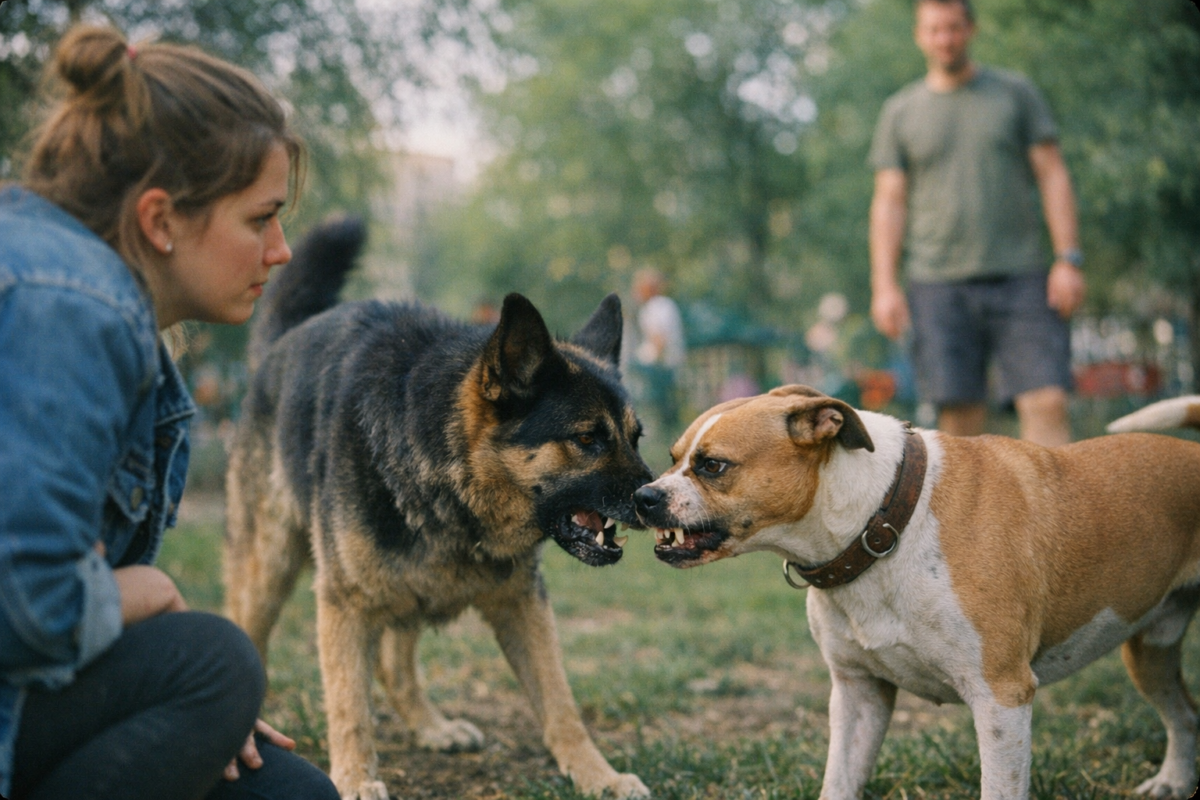
The moment two unfamiliar dogs approach each other, you have a very short window to read what’s about to happen. Watch for mutual loose body language: do both dogs curve toward each other, sniff briefly, and then disengage? That’s a healthy greeting. Do one or both go stiff, make direct hard eye contact, or start to tower over the other dog’s shoulders? Step in calmly before it progresses.

One of the most overlooked triggers is sustained face-to-face contact between dogs. It’s considered rude in dog language. If neither dog looks away within a couple of seconds, redirect your dog with a cheerful recall and give both dogs a moment to reset.

Dogs that are on-lead at a dog park are actually at higher risk of reactive incidents — the lead removes their ability to use calming signals like curving and retreating, and they can feel trapped. If the park has an off-lead area, use it, or give your dog extra buffer space on-lead greetings.

We go much deeper on this in Dog Body Language in the Park: How to Spot Trouble Before It Starts — including a practical checklist for scanning a group of dogs before you even enter the gate.

What Does a Reactive Dog's Body Language Look Like in the Early Stages?

Catching the whisper before it becomes a bark — or a lunge.

Reactivity rarely starts with a lunge. It starts with a hard stare and a still body. Then comes a subtle stiffening through the neck and shoulders. Then the weight shifts forward. By the time the barking and lunging happen, your dog has already been telling you for 10–15 seconds that they’re past their comfort threshold.

The earlier you can interrupt that chain — with a calm U-turn, a food scatter on the ground, or simply increasing distance — the faster you’ll help your dog learn that triggers don’t always lead to overwhelm. Waiting until the bark is already happening means you’ve missed every teachable moment in that sequence.

If your dog is already showing reactive behaviour on walks, our post Understanding Reactive Dog Body Language: Early Warning Signs Every Owner Should Know maps out the full escalation ladder and where to intervene at each stage.

How Can You Use Your Own Body Language to Calm Your Dog?

The moves you make without thinking are louder to your dog than anything you say.

Here’s something most owners find genuinely surprising: you can use calming signals back at your dog, and they work. Turning slightly sideways when your dog is stressed, averting your gaze, yawning deliberately, or moving in slow, curved arcs instead of walking straight at them all communicate safety and deference in a language your dog already speaks.

Contrast that with the things we do without thinking: looming over a dog, reaching straight for their head, making direct prolonged eye contact, or rushing in fast and excited. To a stressed dog, these are threatening gestures — even when they come from someone who loves them.

This is a full topic on its own — our post How to Use Calming Signals in Your Own Body Language to Communicate Better With Your Dog walks through exactly which signals to mirror back and when to use them for maximum effect.

Your Questions About Dog Body Language, Answered

Straight answers to the things Perth dog owners ask us most often.

Is my dog actually trying to communicate, or am I reading too much into it?

You’re not imagining it — dogs are highly communicative animals and calming signals are well-documented, consistent behaviours observed across thousands of dogs worldwide. The reason it can feel like over-interpretation is simply that most of us were never taught to look for them. Once you learn the vocabulary, the communication becomes obvious.

My dog wags their tail constantly — does that always mean they're happy?

Not always. Tail wagging signals arousal, not necessarily happiness — a fast, stiff, high tail wag paired with a tense body can actually be a pre-aggression indicator. Always read the tail alongside the rest of the body: a loose, low, wide wag with a relaxed wiggly body is the happy version most people picture.

How do I know if my dog is stressed versus just tired?

Timing and context are your best guides. A yawn or a slow movement at the end of a long walk is likely fatigue. The same yawn the moment a child runs toward your dog, or when you raise your voice, is a stress signal. Look at what just happened in the environment immediately before the behaviour — that’s your biggest clue.

Can any dog breed be harder to read than others?

Yes — brachycephalic breeds (like Bulldogs and Pugs) have facial structures that make subtle lip licks and facial tension harder to see. Dogs with very heavy coats or naturally erect ears (like Huskies or German Shepherds) can also be trickier. For these dogs, focus more on posture and weight distribution than on facial expression alone.

Want to Understand Your Dog Better — Starting This Week?

At Agile Dogs in Perth, we help you decode what your dog is actually telling you — and build a relationship based on real communication, not guesswork. Call us on 0448 153 316 or hit the button below to start the conversation.

How to Effectively Deal With Dog Barking Issues That Upset Your Neighbours

How to Effectively Deal With Dog Barking Issues That Upset Your Neighbours

  • Excessive barking is almost always driven by an unmet need — identify the trigger before you try to fix it.
  • Punishment-based approaches make barking worse in most dogs; reinforcement-based methods produce lasting results.
  • Neighbour complaints are a warning sign — address the root cause now before a council notice arrives.
  • Consistent daily management, not one-off corrections, is what actually changes barking behaviour.
  • A professional behaviour consultation can resolve in weeks what owners have struggled with for years.

If your neighbour has knocked on the door — or worse, lodged a complaint — you already know the pressure that comes with a dog who barks constantly. The good news is that excessive barking is a solvable problem, but only if you understand why it’s happening in the first place and respond with the right strategy.

Why Is Your Dog Barking So Much in the First Place?

Understanding the trigger is the single most important step you can take.

Dogs bark for specific reasons — boredom, anxiety, territorial alerting, or frustration are the most common. A dog left alone in the backyard for eight hours is not being naughty; it is communicating genuine distress.

Watch when the barking occurs. If it happens every time someone walks past the fence, that’s territorial or alert barking. If it starts shortly after you leave home, separation anxiety is the likely culprit — and it needs a very different solution than fence-line reactivity.

Misidentifying the trigger is the most common reason owners fail. Treating a bored dog with a bark collar, for example, adds stress without solving the underlying problem — and often intensifies the behaviour over time.

Set up a camera or use a free audio-monitoring app to record exactly when and how often your dog barks while you’re away. Even two days of data will reveal patterns you’d never spot otherwise — and it gives your trainer something concrete to work with.

What Practical Steps Can You Take to Reduce Barking at Home?

Small environmental changes can dramatically reduce the frequency before formal training begins.

Start with physical and mental enrichment. A dog who has had a 30-minute structured walk and a food-puzzle toy before you leave is far less likely to bark than one who has been idle since yesterday afternoon.

For fence-line barkers, restrict access to the boundary during the hours your neighbours are most affected — typically early morning and early evening. A simple garden gate that keeps your dog away from the front fence costs very little and can deliver immediate relief.

For separation-related barking, practice short, calm departures and arrivals. Avoid drawn-out goodbyes or excited greetings — both teach your dog that your coming and going is a high-emotion event worth reacting to.

How Do You Train a Dog to Stop Barking on Cue?

Teaching a 'quiet' cue gives you an active tool, not just a management workaround.

The most effective method is to teach ‘speak’ before you teach ‘quiet’. Once your dog barks on cue, you have reliable control over the behaviour — and teaching the off-switch becomes straightforward using positive reinforcement.

When your dog barks at a trigger, wait for a natural pause of even one second, then mark it with a calm ‘yes’ and reward immediately. Gradually extend the duration of silence you require before the reward comes. This is counter-conditioning in its simplest form.

Consistency matters more than intensity here. Five minutes of focused training daily will outperform a single hour-long session every weekend. Set a phone reminder and stick to it.

Never reward your dog with attention — including eye contact or telling them off — while they are actively barking at a trigger. Any response from you reinforces the behaviour. Turn your back, wait for quiet, then redirect to an incompatible behaviour like ‘sit’ or ‘place’.

How Should You Handle the Conversation With Your Neighbour?

How you communicate with neighbours can buy you the goodwill and time you need to fix the problem properly.

Approach your neighbour proactively — before they escalate to the council. Acknowledge the problem directly, tell them you are actively working on it, and give them a realistic timeframe. Vague promises erode trust; a specific plan builds it.

Ask them to keep a brief log of when barking occurs. This serves two purposes: it shows good faith, and it gives you additional data to share with a trainer or behaviourist.

If a council notice has already been issued, act immediately. Document every step you are taking — vet visits, training sessions, environmental changes — because demonstrating proactive effort is often enough to satisfy a council officer before a formal fine is issued.

Frequently Asked Questions About Dog Barking

Straight answers to the questions Perth dog owners ask most about nuisance barking.

Will a Bark Collar Actually Stop My Dog From Barking?

Bark collars can suppress the symptom temporarily, but they do not address the reason your dog is barking. In dogs driven by anxiety, adding an aversive stimulus frequently increases stress and can cause the behaviour to escalate or redirect into other problem behaviours like destructive chewing or aggression.

How Long Does It Take to Stop a Dog's Excessive Barking?

Most owners see meaningful improvement within two to four weeks of consistent, correctly applied training — provided the underlying trigger has been correctly identified. Separation anxiety cases tend to take longer and often benefit most from a structured programme designed by a qualified behaviourist.

My Dog Only Barks When I'm Not Home — How Do I Train That?

This is a classic sign of separation-related distress, which requires a graduated desensitisation programme — not punishment. You systematically build your dog’s tolerance for being alone, starting with departures of just a few seconds, and extend the duration only when your dog is calm at each stage.

Can an Older Dog Be Trained to Bark Less?

Yes — age is not a barrier to behaviour change. Older dogs may take slightly longer to form new habits, but they respond well to positive reinforcement-based training. The key is ruling out any medical cause first, such as cognitive decline or pain, which can both increase vocalisation in senior dogs.

Ready to Resolve Your Dog's Barking for Good?

At Agile Dogs in Perth, we identify the real cause of your dog’s barking and build a practical plan that fits your life. Call us on 0448 153 316 or send an enquiry today.