
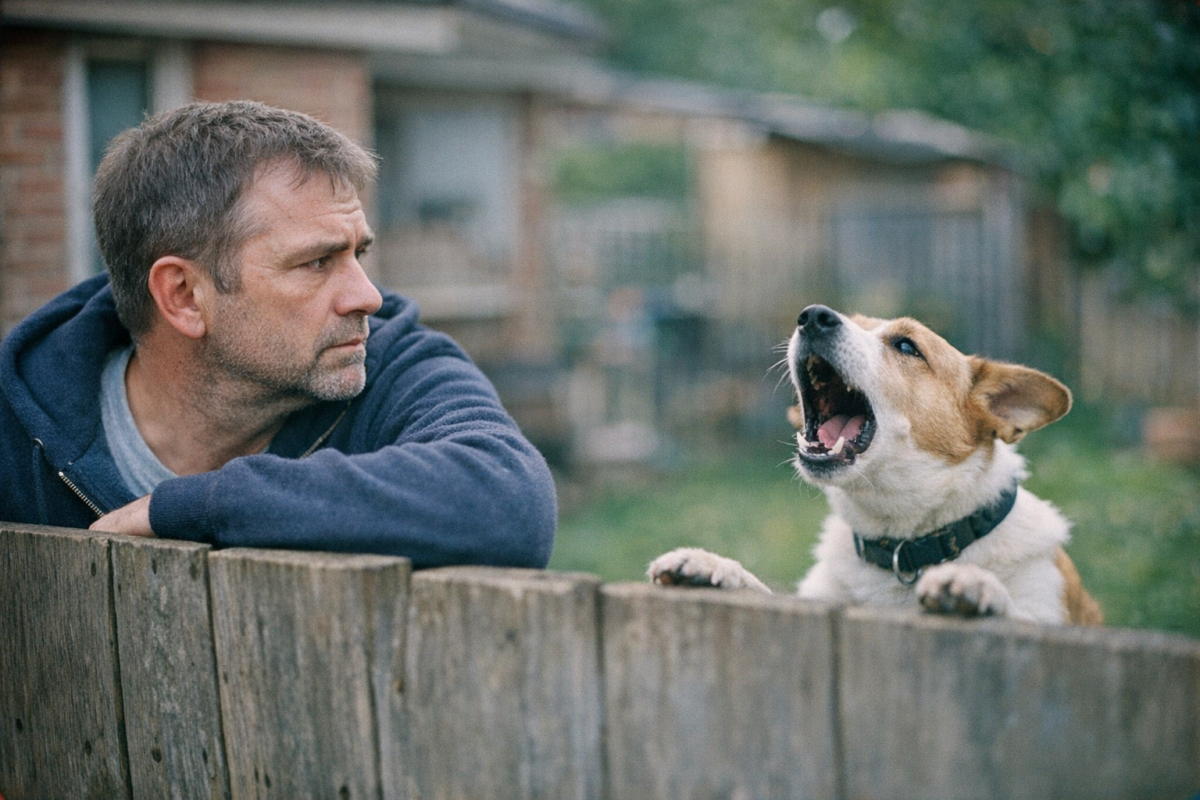
How to Effectively Deal With Dog Barking Issues That Upset Your Neighbours
- Excessive barking is almost always driven by an unmet need — identify the trigger before you try to fix it.
- Punishment-based approaches make barking worse in most dogs; reinforcement-based methods produce lasting results.
- Neighbour complaints are a warning sign — address the root cause now before a council notice arrives.
- Consistent daily management, not one-off corrections, is what actually changes barking behaviour.
- A professional behaviour consultation can resolve in weeks what owners have struggled with for years.
If your neighbour has knocked on the door — or worse, lodged a complaint — you already know the pressure that comes with a dog who barks constantly. The good news is that excessive barking is a solvable problem, but only if you understand why it’s happening in the first place and respond with the right strategy.
Why Is Your Dog Barking So Much in the First Place?
Understanding the trigger is the single most important step you can take.
Dogs bark for specific reasons — boredom, anxiety, territorial alerting, or frustration are the most common. A dog left alone in the backyard for eight hours is not being naughty; it is communicating genuine distress.
Watch when the barking occurs. If it happens every time someone walks past the fence, that’s territorial or alert barking. If it starts shortly after you leave home, separation anxiety is the likely culprit — and it needs a very different solution than fence-line reactivity.
Misidentifying the trigger is the most common reason owners fail. Treating a bored dog with a bark collar, for example, adds stress without solving the underlying problem — and often intensifies the behaviour over time.
Set up a camera or use a free audio-monitoring app to record exactly when and how often your dog barks while you’re away. Even two days of data will reveal patterns you’d never spot otherwise — and it gives your trainer something concrete to work with.
What Practical Steps Can You Take to Reduce Barking at Home?
Small environmental changes can dramatically reduce the frequency before formal training begins.
Start with physical and mental enrichment. A dog who has had a 30-minute structured walk and a food-puzzle toy before you leave is far less likely to bark than one who has been idle since yesterday afternoon.
For fence-line barkers, restrict access to the boundary during the hours your neighbours are most affected — typically early morning and early evening. A simple garden gate that keeps your dog away from the front fence costs very little and can deliver immediate relief.
For separation-related barking, practice short, calm departures and arrivals. Avoid drawn-out goodbyes or excited greetings — both teach your dog that your coming and going is a high-emotion event worth reacting to.
How Do You Train a Dog to Stop Barking on Cue?
Teaching a 'quiet' cue gives you an active tool, not just a management workaround.
The most effective method is to teach ‘speak’ before you teach ‘quiet’. Once your dog barks on cue, you have reliable control over the behaviour — and teaching the off-switch becomes straightforward using positive reinforcement.
When your dog barks at a trigger, wait for a natural pause of even one second, then mark it with a calm ‘yes’ and reward immediately. Gradually extend the duration of silence you require before the reward comes. This is counter-conditioning in its simplest form.
Consistency matters more than intensity here. Five minutes of focused training daily will outperform a single hour-long session every weekend. Set a phone reminder and stick to it.
Never reward your dog with attention — including eye contact or telling them off — while they are actively barking at a trigger. Any response from you reinforces the behaviour. Turn your back, wait for quiet, then redirect to an incompatible behaviour like ‘sit’ or ‘place’.
How Should You Handle the Conversation With Your Neighbour?
How you communicate with neighbours can buy you the goodwill and time you need to fix the problem properly.
Approach your neighbour proactively — before they escalate to the council. Acknowledge the problem directly, tell them you are actively working on it, and give them a realistic timeframe. Vague promises erode trust; a specific plan builds it.
Ask them to keep a brief log of when barking occurs. This serves two purposes: it shows good faith, and it gives you additional data to share with a trainer or behaviourist.
If a council notice has already been issued, act immediately. Document every step you are taking — vet visits, training sessions, environmental changes — because demonstrating proactive effort is often enough to satisfy a council officer before a formal fine is issued.
Frequently Asked Questions About Dog Barking
Straight answers to the questions Perth dog owners ask most about nuisance barking.
Will a Bark Collar Actually Stop My Dog From Barking?
Bark collars can suppress the symptom temporarily, but they do not address the reason your dog is barking. In dogs driven by anxiety, adding an aversive stimulus frequently increases stress and can cause the behaviour to escalate or redirect into other problem behaviours like destructive chewing or aggression.
How Long Does It Take to Stop a Dog's Excessive Barking?
Most owners see meaningful improvement within two to four weeks of consistent, correctly applied training — provided the underlying trigger has been correctly identified. Separation anxiety cases tend to take longer and often benefit most from a structured programme designed by a qualified behaviourist.
My Dog Only Barks When I'm Not Home — How Do I Train That?
This is a classic sign of separation-related distress, which requires a graduated desensitisation programme — not punishment. You systematically build your dog’s tolerance for being alone, starting with departures of just a few seconds, and extend the duration only when your dog is calm at each stage.
Can an Older Dog Be Trained to Bark Less?
Yes — age is not a barrier to behaviour change. Older dogs may take slightly longer to form new habits, but they respond well to positive reinforcement-based training. The key is ruling out any medical cause first, such as cognitive decline or pain, which can both increase vocalisation in senior dogs.
Ready to Resolve Your Dog's Barking for Good?
At Agile Dogs in Perth, we identify the real cause of your dog’s barking and build a practical plan that fits your life. Call us on 0448 153 316 or send an enquiry today.